
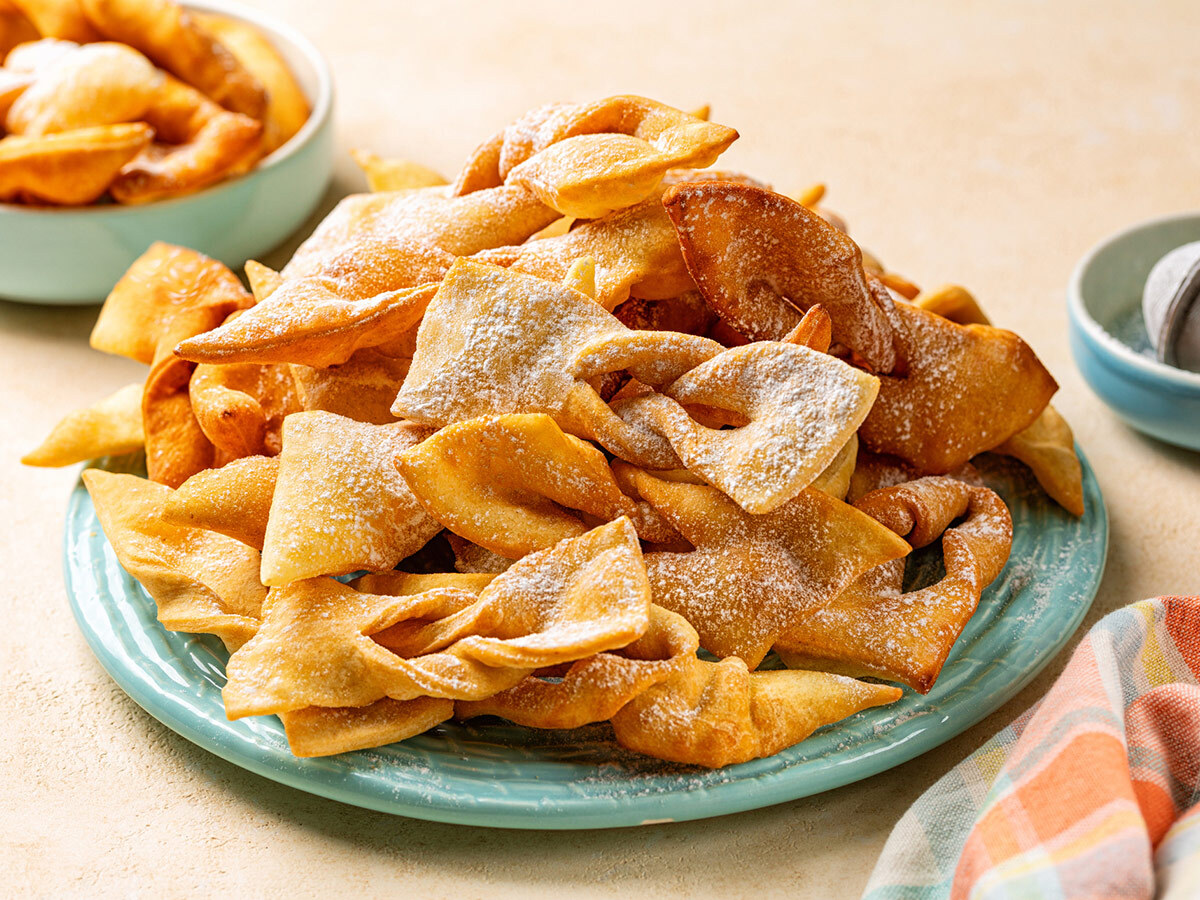
 Fattigmann means poor man, and the name is a joke at its own expense — the dough takes cream, egg yolks, butter and often cognac, so it is one of the richest things on a Norwegian Christmas table. Also called fattigmannbakkels, poor man’s pastry, it crossed the Atlantic with Norwegian emigrants in the nineteenth century and is still baked across the Upper Midwest.
Ingredients
- 1 egg
- 3 egg yolks
- 1/4 cup heavy cream
- 4 teaspoons white sugar
- 1 tablespoon butter, melted
- 1/4 teaspoon ground cardamom
- 1 1/2 cups all-purpose flour
- 4 cups lard for frying
Method
- In a large bowl, beat the egg and yolks together. Stir in the cream, sugar, melted butter and cardamom.
- Mix in enough of the flour to make a soft but manageable dough. Handle it as little as possible, or the cookies will be tough.
- Heat the lard in a deep skillet to 375°F (190°C).
- On a floured cloth, roll the dough out to 1/8 inch thickness. Cut into 2 x 2 inch diamonds.
- Fry in the hot lard until lightly browned.
- Drain on paper and dust with confectioners’ sugar once cool.
Getting them right
Two things separate good fattigmann from tough fattigmann. Work the dough as little as you can — every extra minute of handling shows up in the texture. And keep them uniform: the cookies should match in size and thickness, and be fried neither too dark nor too pale.
On the Christmas plate
Fattigmann is one of the syv slag, the seven sorts traditionally baked for a Norwegian Christmas. It usually appears alongside goro and sandbakkels.